What Is a Kolache? Texas’s Favorite Pastry, Explained
The first time I had a kolache in Texas, I was surprised by how fluffy the dough was. I honestly can’t remember which bakery it was anymore — but I still remember how fresh and satisfying it tasted, and I’ve been paying attention to kolaches ever since. Running a site about Texas restaurant menus, I see them everywhere: donut shops, gas stations, bakery cases, breakfast menus. And I’ve noticed most people outside Texas — and plenty inside it — aren’t quite sure what a kolache actually is.
So here’s the full answer: what a kolache is, how to pronounce it, why Texans argue about the sausage ones, and where this pastry actually came from. It’s a better story than you’d expect from a breakfast snack.
The short answer: a kolache koh-LAH-chee is a soft, slightly sweet yeast pastry from Czech tradition, with an indented center filled with fruit, sweet cheese, or poppy seed. Czech immigrants brought it to Central Texas in the 1800s, and Texas made it its own — including inventing a savory sausage-filled cousin called the klobasnek kloh-BAH-snik that most people now just call a “sausage kolache.”
Kolache vs. Klobasnek: The Debate Every Texan Eventually Joins
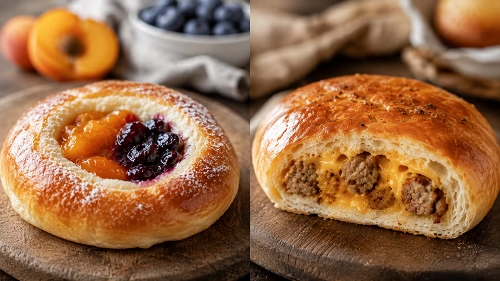
Here’s the thing that surprises newcomers most: if you walk into a traditional Czech bakery in Texas and ask for a “sausage kolache,” an old-timer might gently correct you. By the traditional definition, a kolache is always sweet — fruit, cheese, or poppy seed sitting in that signature indented center. The sausage-wrapped version is technically a klobasnek (plural: klobasniky), from klobasa, the Czech word for sausage.
The distinction is real enough that the CEO of the famous Czech Stop bakery in West, Texas has said their old-timers genuinely don’t like hearing a klobasnek called a kolache. And Czech communities in Iowa — the other big Czech-American hub — side firmly with the purists: their kolaches are fruit-filled, full stop.
Kolache
- Sweet, open-faced pastry with an indented center
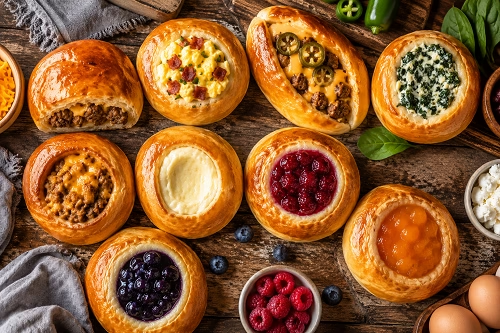
- Traditional fillings: apricot, prune, cherry, poppy seed, farmer’s cheese
- Brought to Texas by Czech immigrants in the 1800s
- Served at weddings, church fairs, and festivals for generations
Klobasnek
- Savory — sausage fully wrapped inside the same soft dough
- Invented at the Village Bakery in West, TX in the early 1950s
- Conceived as a Czech spin on the hot dog, per the founder’s family
- What most Texans mean when they say “sausage kolache”
In everyday Texas life, the battle is mostly lost — “kolache” now covers both, and every donut shop in Houston or Dallas will know exactly what you mean. But knowing the difference is the fastest way to sound like you belong in the Czech Belt.
A Short History: From Czech Villages to Texas Gas Stations
Kolaches came to Texas with Czech immigrants who began settling the state’s central farmlands and coastal plains in the 1850s, with waves continuing into the early 1900s. They built tight-knit farming towns — now known as the Texas Czech Belt — where churches, festivals, and family recipes kept the culture alive. Today more than 200,000 Texans claim Czech descent, and the pastry followed the people.
For a century, kolaches lived at weddings, church picnics, and family kitchens rather than store shelves. That changed in the early 1950s in a small town called West, Texas (the town, not the region — it’s just north of Waco), when Wendel Montgomery opened the Village Bakery, widely credited as the first commercial Czech bakery in Texas. Locals reportedly thought he was crazy — selling kolaches in West was like selling ice in the Arctic, because everyone’s grandmother already made them.
It worked anyway. And then came the invention that changed Texas breakfast: Montgomery wrapped sausage in kolache dough — his daughter described it as his spin on the hot dog — and the klobasnek was born. From there, the idea spread to bakeries, donut shops, and kitchens across the state, picking up cheese, jalapeños, bacon, and eventually brisket along the way.
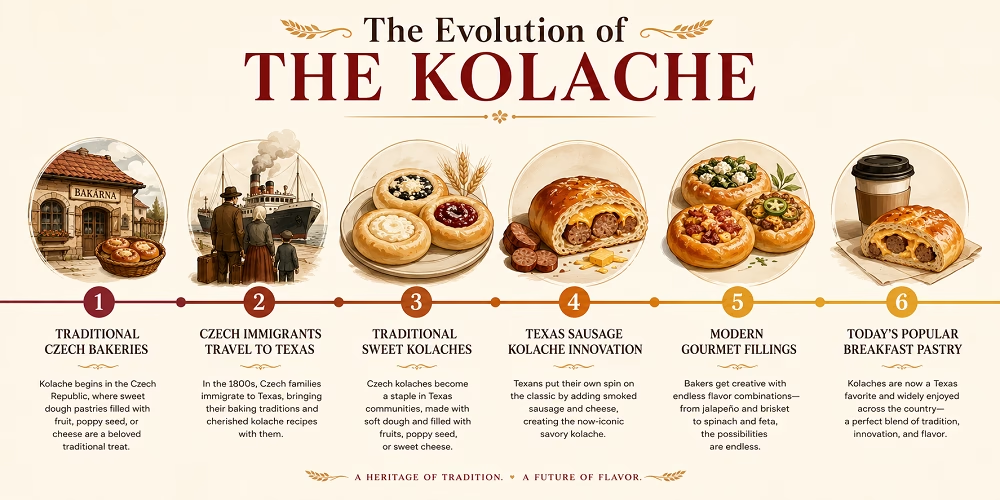
Two more milestones sealed the kolache’s place in Texas culture. In 1983, the Czech Stop opened at Exit 353 on I-35 in West — a gas-station bakery that became a legitimate pilgrimage site, famous for running its ovens around the clock and pulling hundreds of travelers off the highway daily on the Dallas–Austin drive. And in 1997, the Texas Legislature officially declared West the “Home of the Official Kolache of the Texas State Legislature.” When lawmakers give your pastry a title, you’ve made it.
Fun fact: the Kolache Factory, the chain that took kolaches national, was founded in Houston in 1982 — and its modern fillings (pepperoni pizza, chicken enchilada, even a Thanksgiving turkey version) would make a Czech grandmother faint. Tradition and Texas invention have been wrestling ever since.
What Goes Inside: Traditional Fillings vs. Texas Inventions
The dough is the constant — soft, slightly sweet, enriched with eggs and butter, closer to a brioche than a donut. The fillings are where a century and a half of Texas creativity shows up. Explore them below: filter by traditional Czech, sweet, savory, or modern Texas inventions.
The Kolache Filling Explorer
Where to Find Kolaches in Texas
The honest answer is: almost everywhere. But there’s a hierarchy, and it matters.
The Pilgrimage: West, Texas
The town of West (Exit 353 off I-35, between Waco and Dallas) is the kolache capital of Texas, period. The Czech Stop and Little Czech Bakery draw crowds day and night — travelers on the Dallas–Austin run treat it as a mandatory stop. The Village Bakery, the one that started commercial kolache history, still operates downtown with recipes rooted in an old Czech cookbook. Slovacek’s, backed by a sausage company dating to 1957, is the klobasnek specialist of the bunch. If you only ever eat kolaches in one place, make it here.
The Festivals
Westfest, held every Labor Day weekend in West, celebrates Czech heritage with polka, dancing, and mountains of kolaches. The Kolache Festival in Caldwell — a town that calls itself the Kolache Capital of Texas, a title West would dispute — runs its own baking competitions each September. Texans take this rivalry more seriously than some sports.
Everywhere Else
Beyond the Czech Belt, kolaches conquered the Texas donut shop — nearly every one in Houston, Dallas, San Antonio, and Austin sells sausage kolaches alongside the glazed donuts, typically for $2–4. Gas station bakeries (including the famous Buc-ee’s) sell them by the thousands to road-trippers. They’re the unofficial fuel of the Texas morning commute.
What Does a Kolache Taste Like?
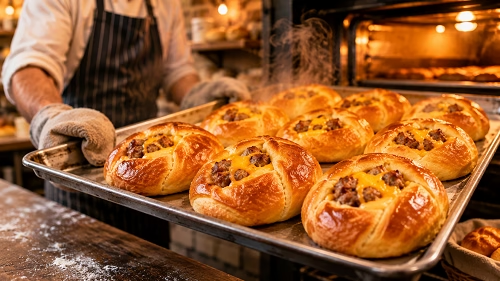
If you’ve never had one: imagine the softest dinner roll you’ve ever eaten, but slightly sweet, with a texture somewhere between brioche and a very good donut — minus the frying. That fluffiness is the whole point; it’s what surprised me on my first one, and it’s the test of a real bakery kolache versus a mass-produced imitation. The sweet versions eat like a gentler, breadier danish. A good klobasnek is basically the perfected form of the pig-in-a-blanket: warm, soft dough around a snappy sausage, ideally with a hit of jalapeño and melted cheese.
One warning from experience watching Texans debate this: kolaches made with actual yeast kolache dough and kolaches made with repurposed donut dough are not the same thing. Traditionalists can tell in one bite. If the dough tastes fried or greasy, you’ve had the imitation — go find a Czech bakery and try again.
Kolache FAQ
How do you pronounce kolache?
Koh-LAH-chee, with the stress on the middle syllable. The plural in Czech is “kolace,” but in Texas everyone just says “kolaches.” The savory cousin, klobasnek, is pronounced kloh-BAH-snik.
Is a kolache sweet or savory?
Traditionally, always sweet — fruit, sweet cheese, or poppy seed in an open, indented center. The savory sausage-filled version is technically a klobasnek, a Texas invention from the early 1950s, though most Texans now call both “kolaches.”
What’s the difference between a kolache and a klobasnek?
Same soft, slightly sweet yeast dough — different construction and filling. A kolache is open-faced and sweet; a klobasnek fully wraps a savory filling, classically sausage, and was invented at the Village Bakery in West, Texas as a Czech take on the hot dog.
Where did kolaches originate?
Kolaches originated in Czech (Bohemian and Moravian) baking tradition and came to Texas with Czech immigrants who settled Central Texas from the 1850s onward. The savory klobasnek, however, is a genuine Texas original.
What is the kolache capital of Texas?
Two towns claim it. West, Texas was declared “Home of the Official Kolache of the Texas State Legislature” in 1997 and hosts Westfest every Labor Day. Caldwell calls itself the Kolache Capital of Texas and holds its own Kolache Festival each September. Texans have not settled this argument, and probably never will.
Are kolaches just donuts?
No — and this matters to purists. Real kolaches use a yeasted, enriched pastry dough that’s baked, not fried. Many donut shops make “kolaches” with donut dough, which traditionalists consider an imitation. The texture difference is noticeable: real kolache dough is pillowy and bread-like, not greasy.
Hungry now? We publish real menus with prices for restaurants across Texas — from Houston and Dallas to San Antonio and El Paso — so you can see exactly what’s worth ordering before you go.