El Paso Isn’t Tex-Mex. It’s Border Food.
Sitting on the river directly across from Ciudad Juárez, El Paso cooks its own thing — and locals will correct you if you call it Tex-Mex. These four restaurants map the full range of it, from a $2 rolled-taco cult that’s barely changed since 1953 to a nixtamal kitchen that’s been a James Beard semifinalist.
See the FourThe Range of El Paso, From $2 to James Beard
Not four versions of “authentic flavors” — four genuinely different corners of El Paso’s border cooking, each researched from the source.
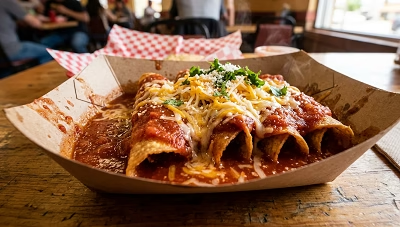
Chico’s Tacos
Founded on July 4, 1953 by boxing promoter Joe Mora, Chico’s is the city’s most famous — and most divisive — restaurant. The specialty never changes: three rolled tacos (technically flautas) sitting in a soupy, tomato-broth sauce under a pile of shredded cheese, eaten with a fork. It’s cheap, it’s cash-only, it’s a late-night ritual, and locals are fiercely loyal to a dish outsiders often can’t explain. Still run by the Mora family.
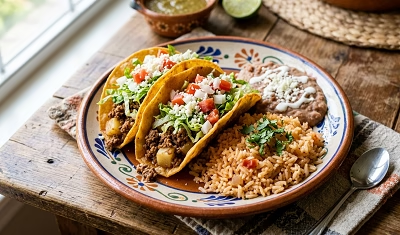
L & J Café
Known to everyone as “the old place by the cemetery,” L&J has sat across from the historic Concordia Cemetery since 1927 — starting life as a Prohibition-era speakeasy before becoming the family-run institution it is today. Four generations later, it’s still where El Pasoans go for green-chile chicken enchiladas, molten chile con queso, and weekend menudo. People drive across the state for those enchiladas.
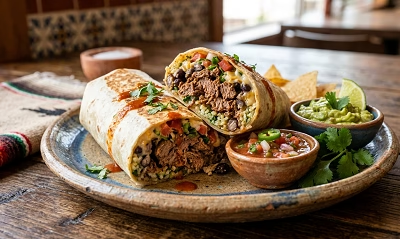
Carlos & Mickey’s
Officially Los Bandidos de Carlos & Mickey’s, this east-side cantina is one of El Paso’s longest-running Mexican restaurants and usually the first name locals give visitors. It’s built for a night out — mariachis, a festive room, and the enormous “Texas-sized” margaritas it’s been famous for over decades (now capped at one per person). Owner Rosa Saenz will tell you not to call the food Tex-Mex: these are her grandmother’s Mexican recipes, and they run spicy.
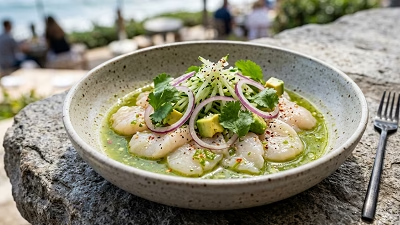
Elemi
The restaurant that put El Paso on the national culinary map. Chef Emiliano Marentes and his wife Kristal built Elemi as an intimate, taco-focused room grounded in nixtamal — heirloom corn cooked, soaked, and ground into masa for handmade blue-corn tortillas, the same craft Marentes grew up eating on tortillas carried across from Juárez. A multiple-time James Beard semifinalist, it’s the modern, special-occasion end of El Paso’s spectrum.
Where Each One Sits
Same city, four very different moods. Tap a dot to see where it lands — and why you’d pick it tonight.
Border Food, Decoded
Four things worth knowing before you eat your way through El Paso — because it really isn’t the Tex-Mex you know from the rest of the state.
It’s its own cuisine
El Paso sits on the Rio Grande directly across from Ciudad Juárez, and its cooking pulls from that border rather than the Tex-Mex of central and east Texas. Say “Tex-Mex” to the wrong local and you’ll get gently corrected.
Red or green
Like neighboring New Mexico, an El Paso plate often comes down to a choice of red or green chile — a different tradition from the gravy-style chili con carne that defines classic Tex-Mex further east.
The tortilla is the point
From Juárez-style tortillerias to Elemi’s nixtamal masa, freshly made corn tortillas are treated as the foundation of a meal here, not an afterthought handed over in a basket.
From cult-cheap to James Beard
The range is enormous — a rolled-taco counter that has barely changed since 1953 and a heirloom-corn kitchen that’s been a James Beard semifinalist, and both are fully, unmistakably El Paso.